
Does Osteopathy Heal Sports Injuries?
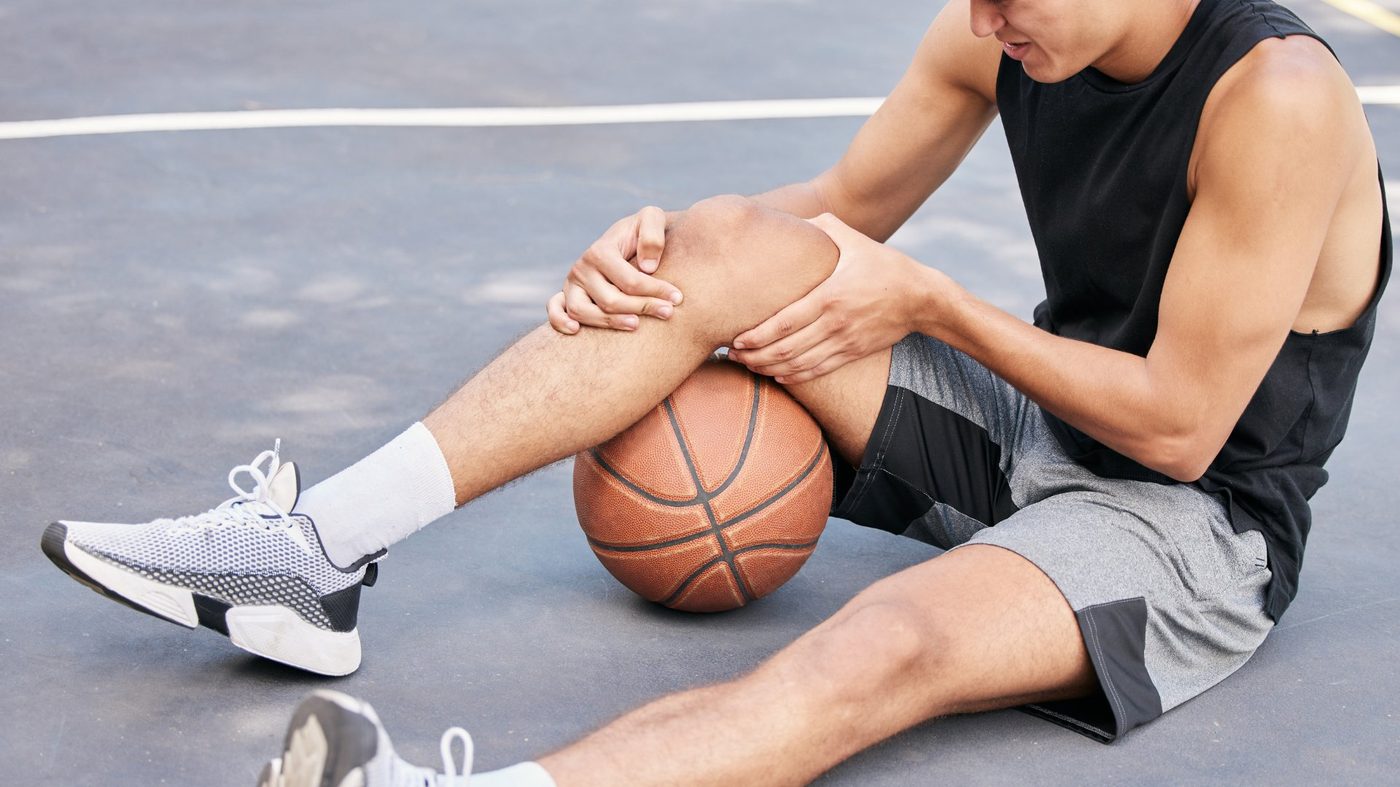
If you train hard — weekend hockey at the local rink, weekday runs through Chinguacousy Park, or strength sessions at the gym — sports injuries come with the territory. The question most active patients ask after a strain, sprain, or nagging ache is simple: can osteopathy actually heal it? At Fix Mi Osteo, a hands-on osteopathy clinic in Brampton, sports injury recovery is one of the most common reasons new patients walk through the door. Here is an honest look at what manual osteopathy can — and cannot — do for a sports injury.
Sports injuries are part of the game — but how you recover determines whether you keep playing.
What Osteopathy Actually Does for a Sports Injury
The honest answer is nuanced. Osteopathy does not "heal" a sports injury the way a cast heals a broken bone. What it does — very effectively — is support the body's own recovery process: restoring mobility, reducing compensations, and helping you return to your sport stronger than before.
Manual osteopathy looks at the whole body, not just the injured area. A sprained ankle is not just an ankle problem — it changes how you walk, how your hip loads, and eventually how your lower back feels. An experienced osteopath assesses these chains rather than treating only the painful spot.
Key insight: Hands-on treatment can reduce pain, improve joint range, and shorten time to return-to-play when paired with appropriate exercise. It is a complement to rehabilitation, not a substitute for it.
The Two Categories of Sports Injuries
Sports injuries fall into two broad groups, and each responds to a slightly different osteopathic approach:
- Acute injuries from sudden trauma — ankle sprains, hamstring pulls, shoulder dislocations, impact injuries
- Overuse injuries from repetitive motion — runner's knee, tennis elbow, plantar fasciitis, rotator cuff strain
Both respond well to manual therapy. The work just looks different in the treatment room.
Common Sports Injuries Treated at Fix Mi Osteo
Among the patients we see at our Brampton clinic, the most frequent sports-related complaints include:
- Muscle strains in the hamstring, calf, groin, and quadriceps
- Ankle and knee ligament sprains
- Low back pain from lifting, rotation sports, or running
- Tennis elbow and golfer's elbow
- Runner's knee and IT band irritation
- Plantar fasciitis and chronic heel pain
- Rotator cuff strain and shoulder impingement
- Neck stiffness from contact and rotation sports
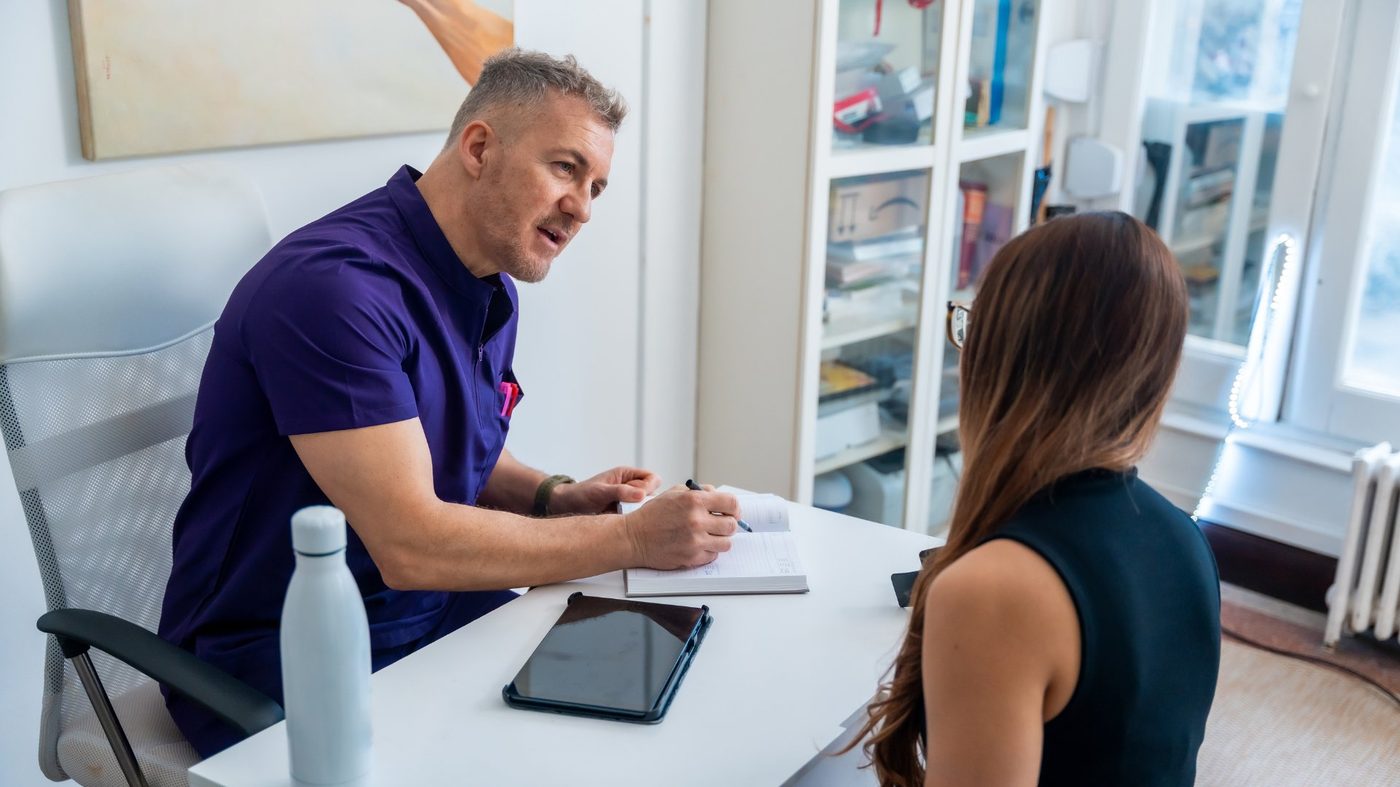
A thorough consultation comes before treatment — understanding the injury, the training load, and the goal.
What a Sports Injury Session Looks Like
A typical sports injury appointment at Fix Mi Osteo runs 75 minutes — long enough to assess thoroughly, treat properly, and discuss recovery without rushing. Here is what to expect:
Full Assessment
Movement testing, palpation, and a review of your training load, injury history, and goals. We need to understand the whole picture before treatment begins.
Hands-On Treatment
Soft tissue work, joint mobilization, myofascial release, and where appropriate, gentle articulation to restore range of motion in the injured area and surrounding chains.
Compensation Correction
We address the secondary tightness or weakness the injury has produced elsewhere in the body — protecting against re-injury and supporting a faster return to training.
Home Plan
Specific exercises, mobility drills, or load-management guidance you can use between sessions to support recovery and rebuild capacity progressively.
Osteopathy vs. Other Sports Injury Approaches
For active patients comparing options, the differences between common treatment paths matter:
| Approach | Focus | Best Suited For |
|---|---|---|
| Manual Osteopathy | Whole-body, root cause | Recurring injuries, mobility loss, recovery |
| Physiotherapy | Exercise & rehab | Post-surgery, structured rehabilitation |
| Chiropractic | Spinal adjustments | Acute joint stiffness, alignment issues |
| Massage Therapy | Muscle & soft tissue | Recovery, tension relief |
| Rest & Ice Alone | Symptom management | Very mild, one-off strains |
The most effective recoveries usually combine approaches — for example, osteopathy with structured exercise, or osteopathy alongside a physiotherapy rehab plan. They are complementary, not competing.
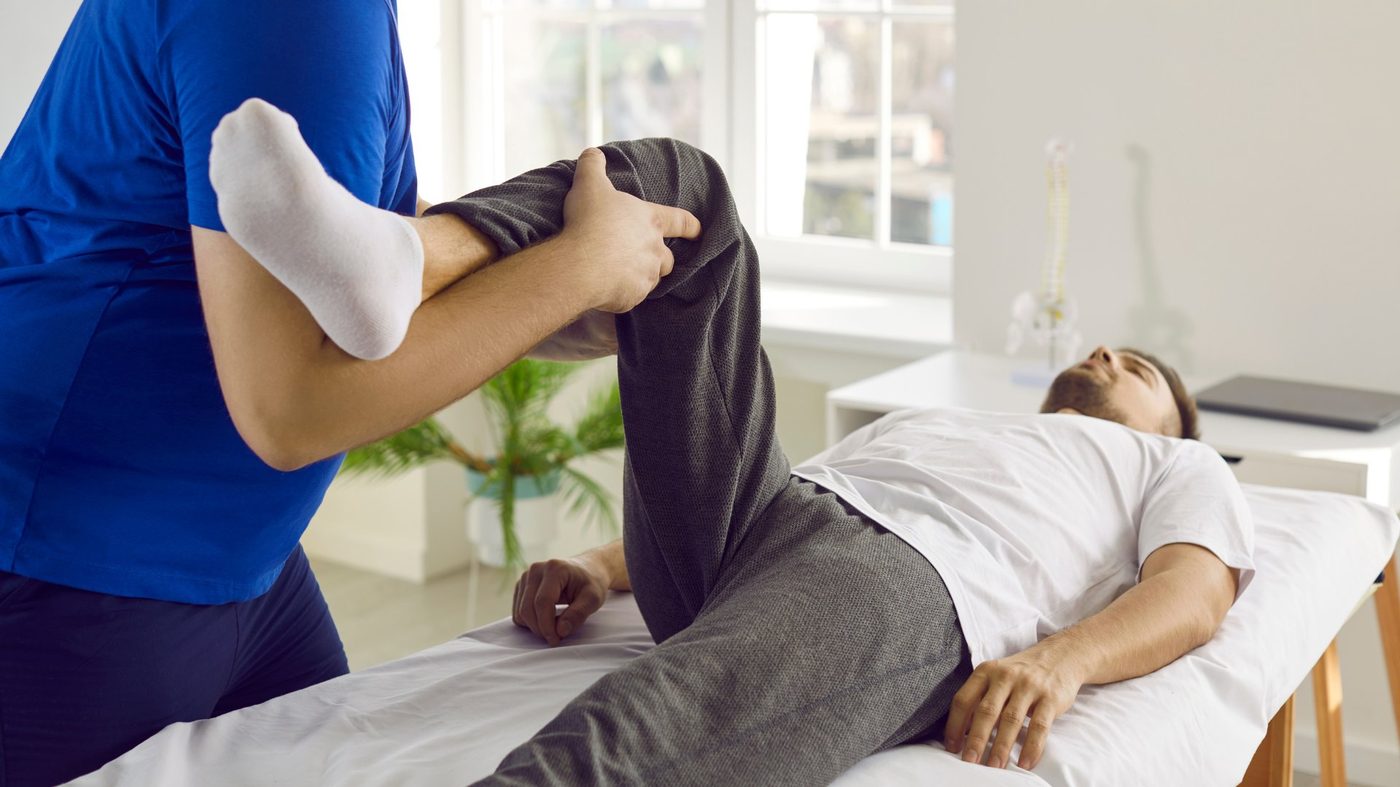
Hands-on mobilization restores range of motion and supports a confident return to sport.
When Osteopathy Is Not the Right First Step
Osteopathy supports recovery, but some injuries need medical assessment first. See a physician or visit emergency care if you experience:
- Severe pain, deformity, or inability to bear weight
- An audible crack at the time of injury
- Numbness, tingling, or weakness in a limb
- A joint that feels unstable or gives way
- Heavy swelling or extensive bruising
Once those conditions are ruled out or stabilized, osteopathy is often part of the recovery plan rather than the entry point.
"The most underrated benefit of regular osteopathic care for athletes is not acute injury treatment — it is prevention. Many sports injuries are predictable, and catching the patterns before they become symptoms is what keeps people training consistently."
Bikramjit Singh, DO(MP) — Fix Mi Osteo
Preventing the Next Injury
Many sports injuries follow predictable patterns: tight hips that eventually pull a hamstring, a stiff thoracic spine that overloads a shoulder, an asymmetric stride that wears one knee. Catching these issues before they become symptoms is what keeps active people training consistently year after year.
For active patients, we often recommend a maintenance schedule — more frequent follow-up osteopathy sessions during heavy training blocks or in-season, fewer during recovery phases. It is similar to how a serious athlete maintains their equipment: small, regular adjustments cost far less than major repairs. For nervous-system and recovery support, cranial sacral therapy can also be added to your plan.
Recover from Your Sports Injury — Stronger
Get a clear assessment, hands-on treatment, and a return-to-training plan from Brampton's hands-on osteopathy clinic. Same-week appointments available — no referral needed.
Book Your Appointment